Valentine’s Day will see the launch the first dealcoholized wine from a Premier Grand Cru Classé. The bold and unique product, thought to be the first to be made from botrytized grapes, comes from Château Sigalas-Rabaud in Sauternes in a joint-project with Moderato, the Paris-based pioneer of dealcoholized wine. db’s Bordeaux correspondent Colin Hay reports.
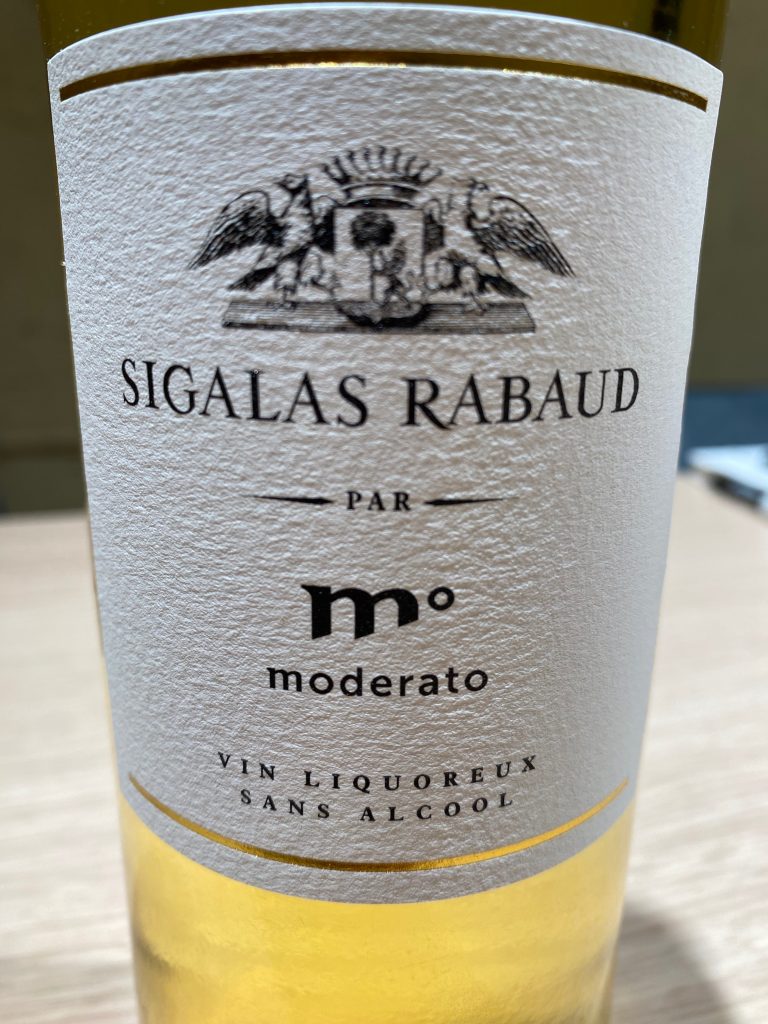
I was lucky enough to be amongst the first to taste this with Laure de Lambert Compeyrot, Sigalas-Rabaud’s director, and the team that produced it in the offices of Moderato last week. It is, by some distance, the most interesting and the most impressive dealcoholized wine that I have yet encountered and I suspect that it will find enthusiastic admiration both from long-standing aficionados of top-end Sauternes and from neophiles intrigued to see just how good dealcoholized wine can be.
Honestly, I was amazed by what I tasted – above all by the sense of terroir expressed in this product. I might, of course, be kidding myself (auto-persuasion is, after all, the deadliest of the wine-writer’s deadly sins!) but tasted blind and told that this came from a property in Sauternes, I think I would have picked that property as Sigalas-Rabaud (for its delicate white fruit and white florality).
The project
Given the ambition and sheer radicalism of this unprecedented project, to say nothing of the technical challenges of making a dealcoholized wine from barrel-aged Sauternes, it has come to fruition remarkably quickly. The project was launched after a first meeting between Laure de Lambert Compeyrot and the Moderato team at Vinexpo 2025 just under a year ago – and the first release will appear on the shelves of La Grande Epicerie and other leading cavistes just after Vinexpo 2026 closes its doors for a retail price of €29.90 per bottle.
There are around 6,000 bottles in the first release. It is based on the 2024 vintage and sourced from individual barrels that would otherwise have been destined for the grand vin itself. They will have seen a little less barrel aging than Sigalas-Rabaud itself (around 6 months) and the oak profile of the finished product (recently bottled) is subtle but present. The botrytis character is very evident, if perhaps a little less so aromatically than on the palate, and the balance between Sigalas’ characteristic citrus-charged acidity and the botrytis-infused residual sugar (at around 85 g/l) is truly remarkable given the absence of alcohol. So too is the sheer sense of viscosity and structure in the mouth.
Source: The Drinks Business