Introduction
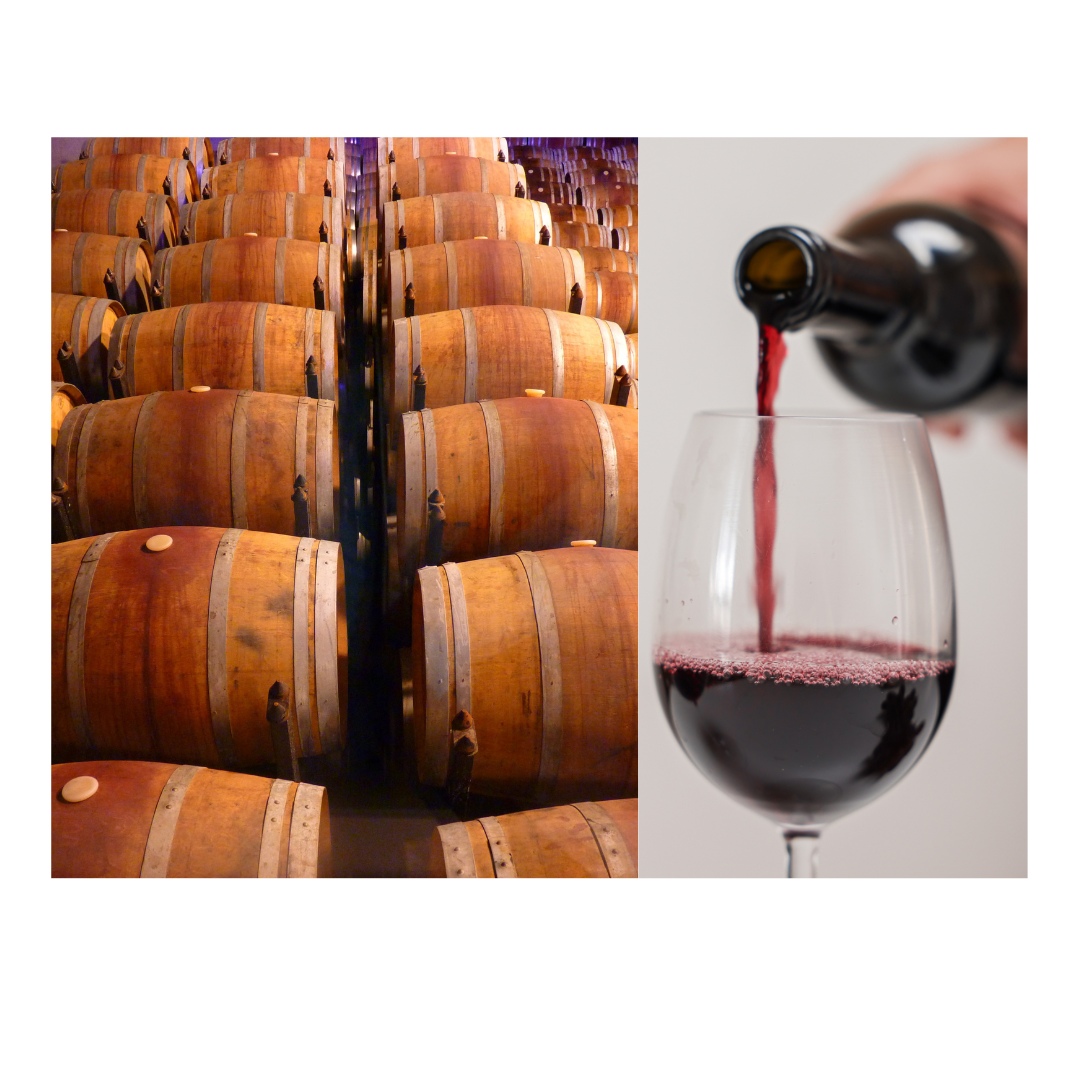
Maturation of wine occurs between the end of the maceration and the bottling stage. Wine can be stored in different containers, including stainless-steel tanks, concrete tanks or oak barrels. Oak barrel maturing is very popular nowadays, because it positively influences the quality and aromas of the wines (Garde-Cerdán & Ancín-Azpilicueta, 2006). Many Bordeaux wines, especially the famous ones, are matured in oak barrels. The use of a barrel is not enough to produce a wine of high quality. It is also necessary to carry out this oenological method in a sustained way and with expertise. Wine ageing in an oak barrel promotes a balance between oxygen and the various constituents of wine, such as tannins, colours, aromas, proteins and enzymes. During this stage, wine is subject to many chemical changes due to reactions between the wine constituents, the micro-oxygenation through the staves and the compounds extracted from the oak barrel (Fernández de Simón et al., 2014; Maioli et al., 2022).
Recently, 1H NMR-based metabolomics has emerged as a meaningful tool to ensure the traceability of alcoholic beverages, such as spirits (Teipel et al., 2020) and wines (Le Mao et al., 2023; Solovyev et al., 2021; Valls Fonayet et al., 2021). Based on quantitative analysis (targeted approach) or fingerprinting (untargeted approach), NMR metabolomics can be used to control geographical origin, real composition (including grape variety, for example) and vintage. More recently, 1H NMR-based metabolomics has been used successfully to monitor wine quality during the winemaking process (Le Mao et al., 2021; López-Rituerto et al., 2022).
Red wine maturation in oak barrels induces numerous chemical transformations as a result of different mechanisms, including oxidative reactions and compounds released from oak (Alcaide-Hidalgo et al., 2007; Ma et al., 2022). In turn, this maturation process induces significant sensory changes in the final wine. Recently, Cassino et al. have demonstrated the interest of applying 1H NMR when investigating wine evolution during bottle ageing (Cassino et al., 2019). The aim of the present study was to investigate the evolution of wine during maturation in oak barrels via NMR-based metabolomics. Monitoring wine compound evolution during maturation could be useful for controlling overall wine quality. Red wine was conserved in new oak barrels provided by three different manufacturers, and analysed after one and twelve months conservation in the controlled environment of a cellar. The wine constituents were monitored via 1H NMR spectrometry combined with multivariate statistical analysis.
Read more here:
https://drive.google.com/file/d/18PeGniLeYFS8klR_wvV4M8D8_pJT1H5m/view?usp=sharing
Source: Vol. 58 No. 2 (2024): OENO One