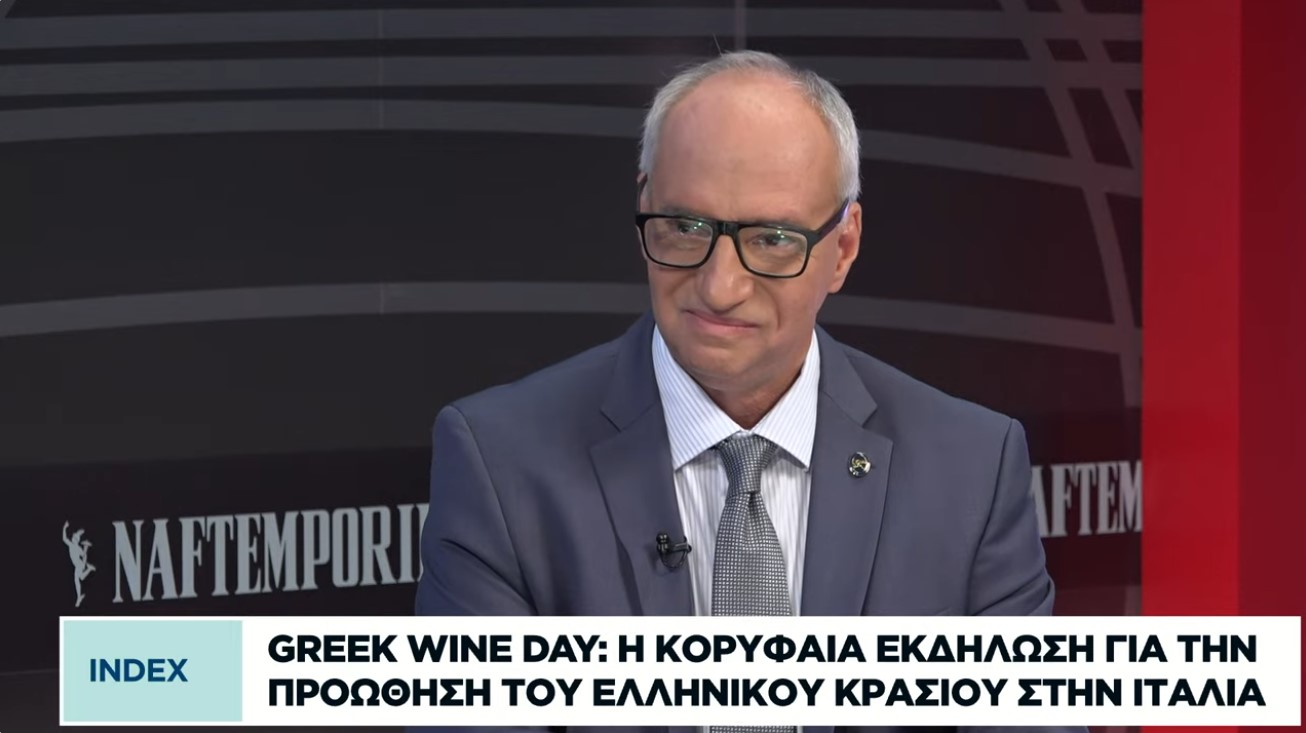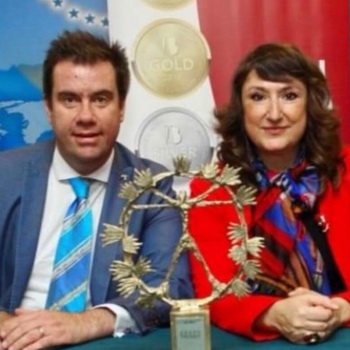
The BIWC chairman Konstantinos Lazarakis MW and BIWC Managing Director Galina Niforou explain to Allwinestories how BIWC became the biggest wine event in the Balkans.
1.When did you first have the idea of a wine competition judged only for Balkans Wines?
Galina Niforou:
I had this idea in 2011 and I shared it with Konstantinos Lazarakis MW, because I saw the development of wine sector in Bulgaria as well as in Greece, where I spend half of my time. I also observed the social media effect, so I started visiting wineries from the region and active people in social media and somehow I decided to pay more attention tο each of both countries. At the same period some books appeared in the market, f.e. of Skopje North Macedonia wineries, Bulgarian wineries, Serbian etc. I saw somehow a «Renaissance» in the Balkans. Then we started studying the numbers of productions, the numbers of vineyards and we discovered that Balkans were in the fifth place by production of all global wine! This was amazing, I didn’ t expect it. Actually, this was the crucial point that gave me the strength to continue further. I shared it with Konstantinos, because for me he is the most important wine person in the Balkans· he is the first MW in Greece and in south eastern Europe.
2.What happened between the idea and the realization?
The first years I travelled a lot with my colleagues almost to all Balkan countries. I wanted to share this idea. It was a unique possibility for the wineries to show their wines to prestigious judges and important journalists. I have been in this business for a long time -almost 26 years- and I know that these activities are important not only for export but also for the marketing.
3.How many countries take part and wineries in total?
There are 14 Balkan countries. Sometimes we have extra countries wanting to participate, like Georgia, Moldova, Armenia. The previous years we were hosting 90 wineries, whereas last year we had 241.

4.Please describe us the procedure of the Balkans International Wine Competition & Festival. Who are the judges and which are the judging criteria to rate the wines?
Konstantinos Lazarakis:
We were one of the very first competitions in Europe, but we went out of the OIV system -for us it was an another style judging. It was not allowing interaction between the tasters, not allowing more interesting wines to show «their bests». We went into a system that is closely resembling the Australian wine judging style, which allows more discussion between the tasters. The tasters have the possibility to go back to retaste the wines. It allows more time for wines to develop in the glass. Τhese are important elements for Balkan wines. And we saw that this system works, because since the very first competition we have seen enormously interesting wines get involved, going to double golden trophies. We have wines in a normal wine competition judged under this usual way. I think there will be very slim chances that this wine would shine, so if we’ re talking about f.e. a competition in the United States for Syrah or Chardonnay, I relate to them when we are talking about the Balkans with the amazing treasure of rare grape variety.
5.Why would a winemaker be interested in participating in that events?
Galina Niforou:
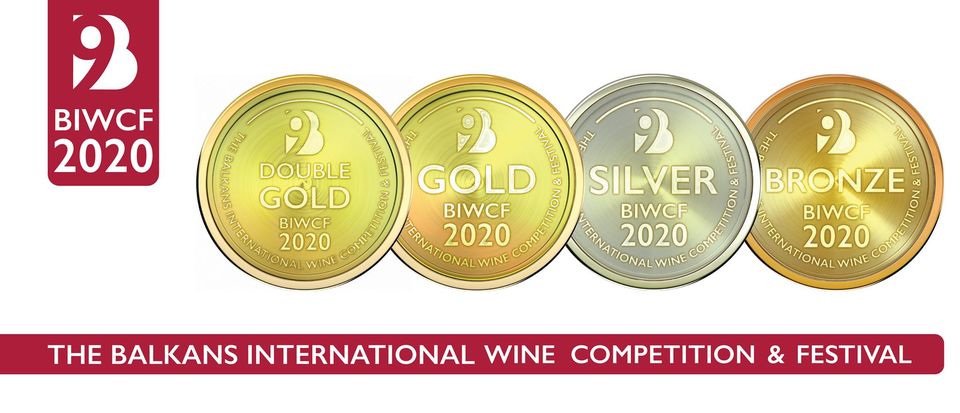
First of all our judging committees are very serious with amazing wine professionals. Every year we have at least 4MW and really important wine personalities of WWC in one of the best judges of each Balkan country so the medals really worth their value. Last year we prepared to take part in Prowein for showing our wines. We had masterclasses with Caroline Gilby MW, who participated many times as judge and she knows very well the Balkan wines. Unfortunately Prowein was cancelled and I really hope we will be able to participate in 2022 as well as in some other exhibitions, in Italy and France. We want to show the potential and the great quality of the Balkan wines. We have published a digital catalog and sent it to more than 50.000 importers - traders all over the world.6.Last year the Balkans Wine Competition & Festival moved to Belgrade. This year Skopje will host the first part of the event. Are you planning to keep this switching between Balkan countries?
We are talking about this from the very beginning and some how we needed to put our base. Sofia was the physical center of Balkan peninsula it was very easy to organize such an event. Year after year we started thinking that it would important, if every country could get involved. During the competition our social media channels are frequent by thousands of people as well as the website -everybody is waiting for the medals.
6. Are you going to organize a special ceremony for the 10th Anniversary?
We will organize a Gala Dinner, the night of «Balkan Wine Oscars», as we call it. At first in Skopje we are going to announce the best of show for each country and further changes in our organization. In Sofia, during the festival, we are going to announce the grand trophy winner. Sofia will keep the priority to be the Balkan Wine Capital -just for the festival at least.
What is the evolution of the Balkan wines during these years?
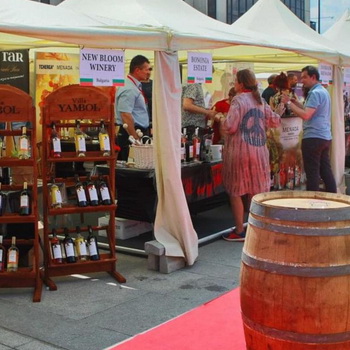
Konstantinos Lazarakis:
We have been witnessing a huge number of tense last year in the Balkans as a group. It’ s very important to think about the general trends, but in some cases it is important to think the changes happening to each country. I also think we have witnessed a steady change to more different wines, more adventurous wines, more alternative wines, producing methods, winemaking methods, more belief to works, local grape varieties going away from the usual Cabernet, Merlot or Chardonnay. We also have been witnessing a more extrovert approach on behalf of these producers. The problem across Balkans, when we started was: «I am making wine, the best wine of the world, why try harder, why go to the competition, why try to have a nice looking label, why should I do a promotion?». Now more and more people understand that even if you are Romanee Conti or Petrus, you must work hard on every simple part of what you do. Even these wineries are making a lot of marketing work, they are not going to have advertisements on tv, but there different ways of marketing to promote your wines. I think that those who came close to us and work around the competition, they took a message on that front as well.
Balkans might be the most underrated wine region in the world. You can have a hell of grape wine producers at extremely competitive prices. In an ideal world, where what counts is only what’ s in the bottle and how much you pay to buy that bottle, I think Balkan wines are the most successful wine region in the world.