The Timorasso, grape variety Piedmont is a traditionally “red” region, just over 60% of the wine produced there is indeed red. White wine, in constant growth until 2017 when it reached 46% of the wine produced in the region, has experienced a decline in recent years which has brought it, in 2020, to 39% of total production. The most widespread white grape variety is Moscato, followed by Barbera and which, with approximately 10,000 hectares, represents around 22% of the regional vineyard. Cortese, being the fifth most cultivated grape variety in the region, occupies a good position, with 2,600 hectares of vines, followed by the international variety, Chardonnay (about 1,000 hectares of vines) and Arneis with 600 hectares.
But there are other white-grained grape varieties typical of Piedmont, although not very widespread, for example Erbaluce (226 hectares) and La Favorita (180 hectares). But the variety that interests us in this focus is a variety that was literally disappearing but which in recent years has aroused great interest from wine critics and consumers and which is therefore now characterized by exponential growth of its vineyard
This is Timorasso, a grape variety present in the Tortona region (we are southeast of Alessandria) since the Middle Ages and which in the past has known good times. Much information about this vine can be found in the appendix - edited by Roberto Marro - of the new edition of the popular winegrower’s manual, published in 1898 by Luigi Cataldo and reprinted a hundred years later, in 1998 and later in 2020. Let’s leave the oldest story, when the name of the grape variety did not appear in the writings, if not associated with Grignolato and go directly to the most reliable source, which is that of Raimondi S., Torello Marinoni D., Schneider A ., 2014 Timorasso. In: Italian Vitis Database, www.vitisdb.it, ISSN 2282-006X which reads as follows: Timorasso appears in historical texts in the 1830s: Giorgio Gallesio mentions it and describes it briefly in the countryside of Novi Ligure in 1834 (Gallesio, 1995) while, the previous year, rows of «Temorasi» are planted on the territory of Monleale, in the region of Tortona (Anonymous, 1779-1834).
In the «Ampelography of the province of Alessandria» by Demaria and Leardi (1875) we find the first detailed description of Timorasso which, as the authors affirm, occupied at that time a quarter of the area intended for white grapes in the Tortona region. Its cultivation in this region became even more important at the end of the 19th century when a large and profitable trade began. That of the must wines of Timorasso and Citronino (another local grape variety) still in fermentation (known in dialect as Turbolini or Virginén) which left by wagons from Tortona station to be consumed very young in Lombardy or for finish their fermentation and be refined in Switzerland and Germany (Priora, 1891). While in the 1960s the production of Timorasso was still 14,000 hl (Dell’Olio et al., 1965), by the end of the 1980s it had been reduced to just over 2 ha (about 200 hl).
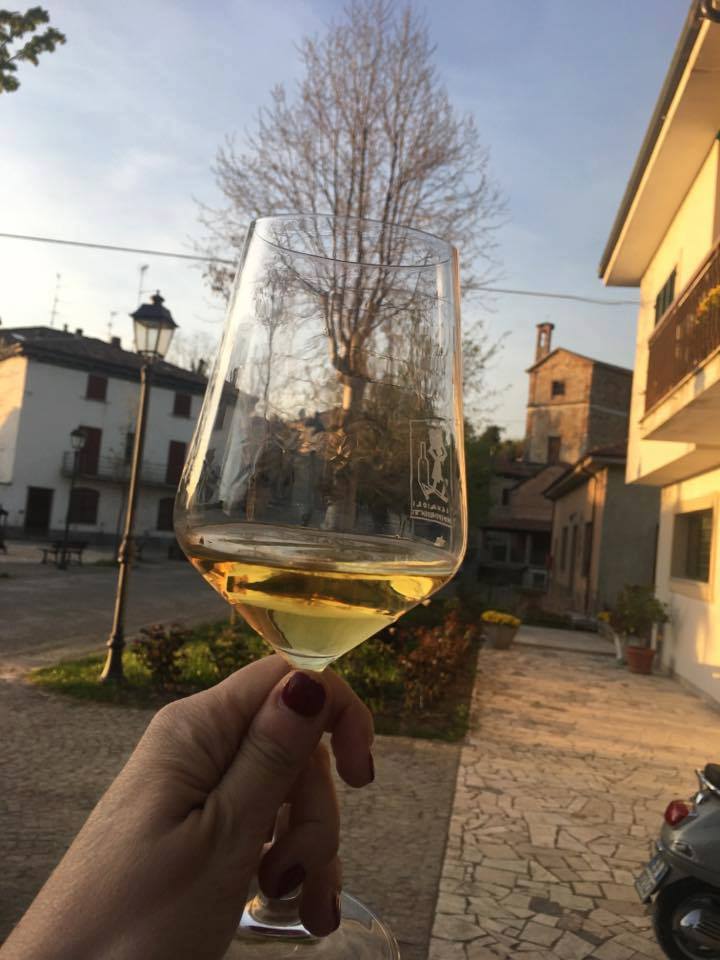
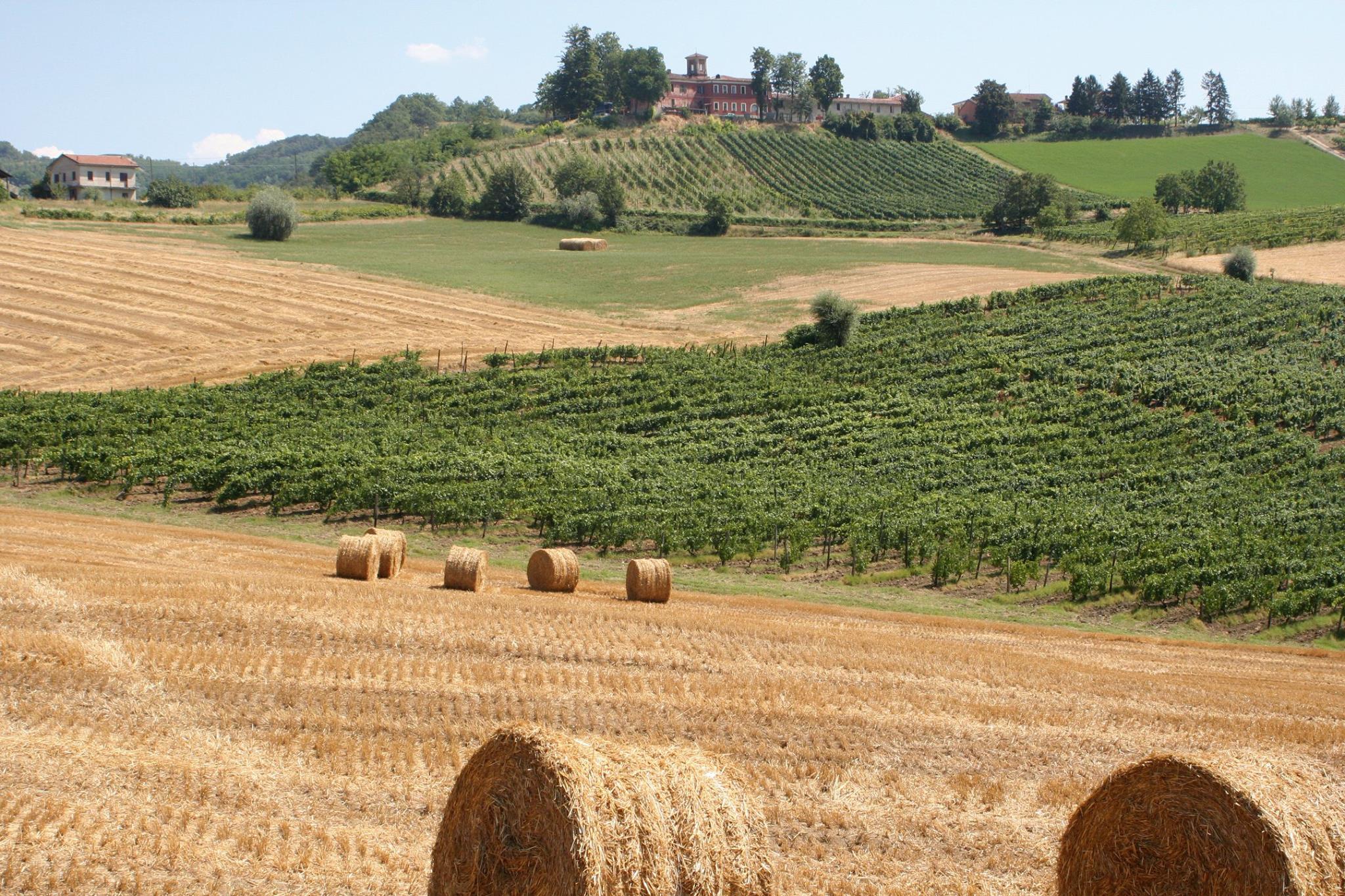
The distribution of the vine affected in the past a wider area than today, ranging from Acquese, where it was perhaps called ‘Moro’, to the west of Oltrepò Pavese. The variety is currently grown almost exclusively in the Tortona region and in the residual vineyards of the Borbera Valley (Alessandria), where it was the main white variety. The Timorasso grapes give a particular wine, practically devoid of terpene aromas, but very rich in norisoprenoids; thanks to this special composition, a good alcohol content and a constant acidity, these products benefit from aging for a few years, an unusual case among dry white wines. But let’s see the data provided by the Consorzio Tutela Vini Tortonesi on the occasion of the Derethona Due.Zero event, held in Tortona on Friday 1 and Saturday 2 April, in which the Anteprima of the Timorasso. The data relating to the increase in the area under vines are impressive, if in 1987 there was only half a hectare of Timorasso left and still in 2000 there were only three hectares of vines, the exponential progression which has operated since is something incredible.
This rebirth is due to Walter Massa, who was the first to believe in the potential of this grape variety, now abandoned by everyone. We were in 1987 and soon two other figures joined Massa, Andrea Mutti and Paolo Poggio. The growing interest in Timorasso wines has also prompted producers from other regions to invest in the Tortona region and now among them there are prestigious names from the Langhe and other famous regions.
Even from a bureaucratic and legislative point of view, Timorasso has a very recent history: In 1973, the Colli Tortonesi Doc is recognized but the Timorasso grape variety is not mentioned there, in fact the denomination is reserved for Colli Tortonesi Barbera and Colli Tortonesi Cortese. In 1996 there is a first revision of the production specifications with the inclusion of other types of wine, but there is still no trace of Timorasso which appears for the first time in the later revision of the specifications. loads that took place in 2005 when the Colli Tortonesi typology was admitted and finally
Timorasso appeared in 2011, when the Terre di Libarna subzone was recognized and reserved exclusively for our grape variety. A new revision of the specifications is currently underway with the introduction of the Derthona Sub-zone with much more restricted rules and which provides for three different types of wine: Piccolo Derthona, Derthona and Derthona Riserva. It was therefore decided to use the historical name of the town of Tortona to link the name of the wine to that of the territory. The challenges envisioned for this new sub-domain are quite rigid and include: • the use of 100% Timorasso grapes • a yield in the vineyard of a maximum of 75 quintals/hectare • the exclusion of valley bottoms with different minimum altitudes for each municipality And, a very interesting feature for energy saving and sustainability: the use of bottles with a maximum weight of 600 gr.
The bottles currently produced are around one million, but the Consortium plans to double this figure by 2030 while, still according to the Consortium’s estimates, 350 hectares of vines should be reached, an objective, given the trend of in recent years, certainly within reach.
Lorenzo Colombo
Master Taster and Teacher O.N.A.V. delegate for the province of Lecco. He carries out numerous activities as a lecturer at Slow Food, School of Italian Cuisine, U3 Carate (University of the Elderly).
Sommelier A.I.S., Tasting Manager, correspondent and manager of the website for the online magazine www.ioeilvino.it . He has collaborated with the Slow Wine guide for Lombardy, participates as a judge in numerous national and international wine competitions.
He has been collaborating for years with the Slow Food Guide "Osterie d'Italia". It is part of the Garantito Igp group.
Thanks to Lorenzo Colombo who will be part one more edition of the panel of 70 expert judges of Mondial des Vins Blancs Strasbourg
Photo Credit: www.collitortonesi.com