Tannin descriptors are widely used by wine professionals to communicate wine quality, structure, and style. However, many terms lack shared definitions and are interpreted differently across experts. This study explored how winemakers conceptualize tannins by analyzing the vocabulary they use, the perceptual dimensions underlying tannin descriptors, and the semantic relationships that structure this specialized language.
Understanding the language of tannins
Tannin perception is a key component of red wine quality. Beyond astringency, tannins contribute to sensations related to texture, body, integration, persistence, and mouthfeel evolution. To describe these perceptions, wine professionals use a rich vocabulary including terms such as silky, green, drying, aggressive, round, or elegant tannin1 2 3.
Despite their widespread use, many descriptors remain ambiguous and lack clearly defined meanings. The same term may be interpreted differently depending on professional experience or winemaking context. This variability complicates communication, sensory training, and the interpretation of wine descriptions.
This study aimed to identify the vocabulary used by wine experts, characterize the perceptual dimensions underlying tannin descriptors, and model the semantic structure of tannin language.
Building a tannin lexicon
The study followed two complementary phases. In the first phase, 14 winemakers from the Rioja DOCa freely described nine red wines selected to exhibit markedly different tannin profiles. These spontaneous descriptions yielded an initial lexicon of 64 tannin-related terms (Figure 1).

Figure 1. Diversity of terms used to describe tannins in red wines. Size represents frequency of use, while color indicates their association with quality (green: positive, red: negative, black: ambivalent).
In a second phase, twenty-nine wine professionals from different Spanish wine regions participated in individual in-depth interviews. Participants discussed the meaning, use, synonymy, and qualitative value of each descriptor. Interview transcripts were analyzed using thematic coding and semantic modelling techniques, grouping descriptors into conceptual dimensions and representing them through a semantic network.
A shared lexical core and a more variable periphery
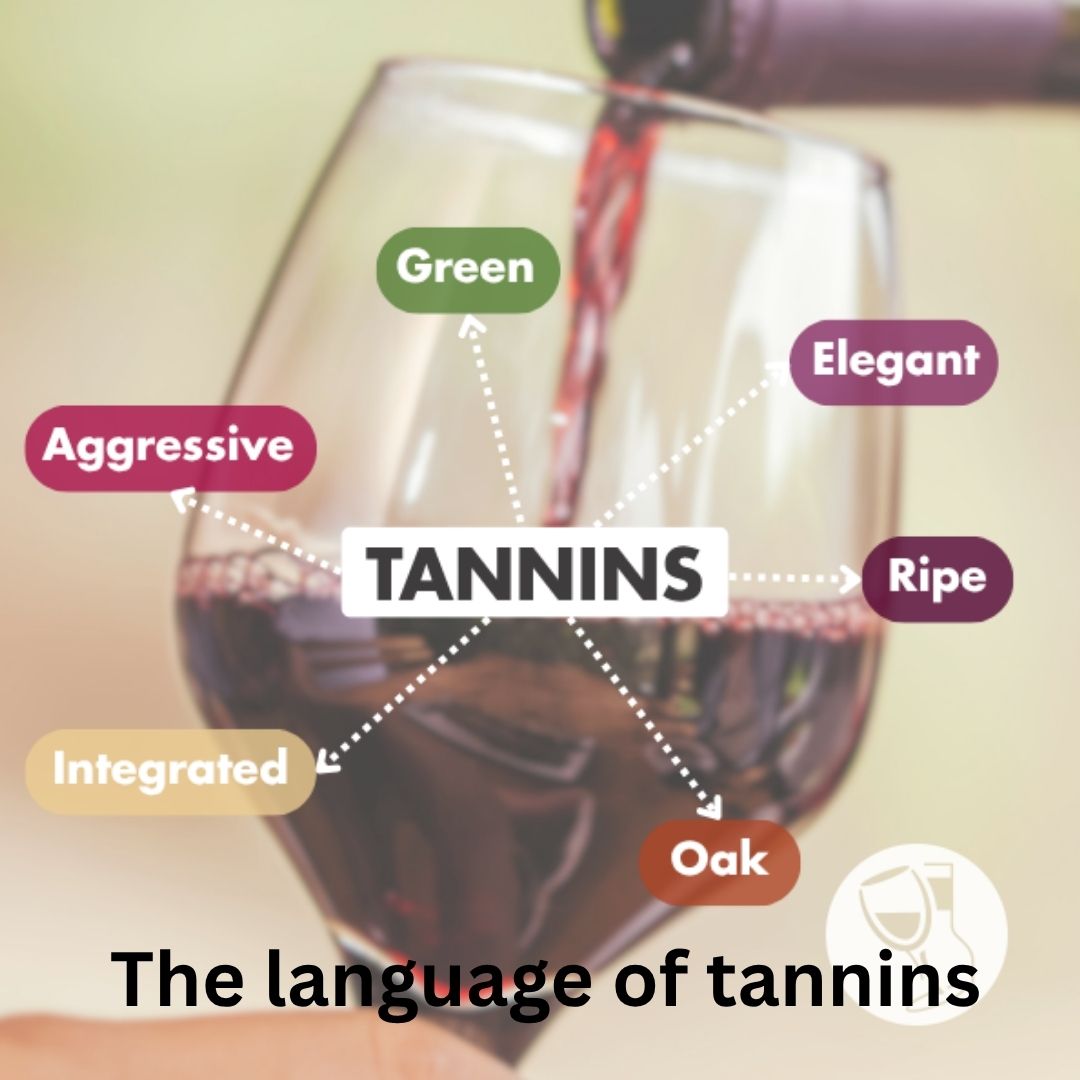
Although tannin vocabulary was highly diverse, a small group of descriptors was widely shared among professionals. The most frequently cited terms were aggressive, astringent, drying, green, hard, and ripe tannins.
Interestingly, five of these six descriptors carried predominantly negative connotations. In contrast, descriptors associated with positive quality, such as silky, polished, integrated, round, and elegant tannin, showed greater variability in both usage and meaning.
These results suggest that tannin language is organized around a relatively stable lexical core surrounded by a more heterogeneous semantic periphery shaped by individual interpretation.
The seven dimensions of tannin language
Semantic analysis identified seven conceptual dimensions that organize tannin vocabulary:
Texture – tactile granularity, ranging from rough and coarse to silky and polished tannin.
Integration – degree of balance and cohesion with the wine matrix.
Intensity – structural weight and persistence of tannins in the mouth.
Maturity – phenolic ripeness, from green to ripe tannins.
Physiological Response – related to sensations such as dryness, contraction, and salivation.
Hedonic Evaluation – perceived quality, including descriptors such as elegant or aggressive tannin.
Origin – tannins associated with oak or barrel ageing.
Together, these dimensions demonstrate that tannin language extends beyond tactile perception and integrates structural, physiological, hedonic, and technological aspects of wine evaluation.
Table 1 presents selected expert-derived definitions of common tannin descriptors discussed during the interviews. These examples illustrate the complexity of tannin terminology and how experts interpret these descriptors in practice.