Source: www.jancisrobinson.com
Article by: Matthew Hayes
When you think of the great personalities of Burgundy, many names spring to mind: names etched in the aspirations of vinous aesthetes, passionate collectors and slick brokers around the globe. You know them all – Christophe Roumier, Dominique Lafon and the late Anne-Claude Leflaive and Henri Jayer to name but four of the most obvious, past and present.
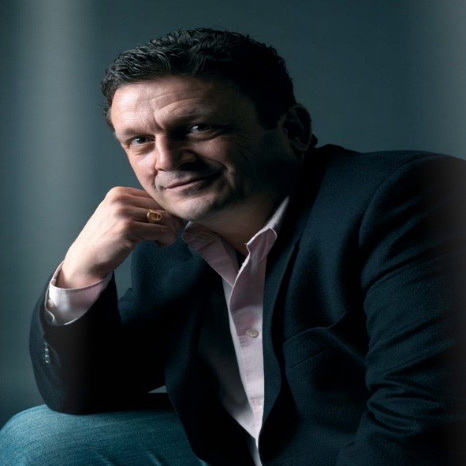
Kyriakos Kynigopolous does not immediately roll off the tongue, but for those in the know, he is one of the most influential éminences grises of the region, a consultant oenologist who has been plying his trade, casting a long shadow on winemaking practices in Burgundy and, ultimately, the style of the wines for the last 38 vintages. His consultancy, Burgundia Oenologie, currently advises more than 200 clients across Burgundy and has, he maintains, at one point or another worked with every producer you might care to name.
The flamboyant identities of many a flying winemaker are more famously associated with Bordeaux or the New World, but Kynigopolous’ influence is complete and undeniable. Such is his imprint on the world of Pinot Noir that Burgundia Oenologie advises across the world from the inevitable hotspots of Oregon and New Zealand to nascent vineyards in far-off Kazakhstan, his native Greece and, inter alia, Belgium. Where there is Pinot, there is Kynigopolous. And how he made his mark in Burgundy was by taking oenology out of the laboratory and into the winery.
Kynigopolous arrived in Dijon in 1982, pursuing a doctorate in oenology in the same class as Véronique Drouhin. Just as Bordeaux was harvesting the first greatest vintage of its modern golden age, Kynigopolous was embarking on a career that would witness Burgundy being dragged out of viticultural stupor and into a period of change and a qualitative revolution, gathering speed in the period from 1990 to 2010. Kynigopolous is modest enough not to assume the laurels for everything, but is realistic enough to see how many changes of technique and philosophy that he promoted have been taken up by so many in a career spanning three generations of many of Burgundy’s finest domaines. From Trapets to Boillots to Groffiers, Kynigopolous has been there, in the cellar and in the vineyard.
Kynigopolous was born and raised in Thessaloniki, in the cool north of Greece, where his family owned a few hectares of vines. A career in viticulture was not expected. If his father had had his way, Kynigopolous would have been a military doctor, but an obsession with science and viticulture from an early age led him to Dijon, and studies for a doctorate under Charles Guillardeau.
It was not the ethereal qualities of Pinot Noir that brought him to Dijon, but yeast. The doctorate was focused on the role of yeasts in the quality of the mousse in champagnes, and a notable, although ultimately fruitless, project was, from 1987, the development of the ceramic-clay porous beads to facilitate remuage. They were abandoned in Champagne in the end, but live on in Portugal, where a single producer uses them for rosé production.
Back in 1982, the plan was to learn about cool-climate winemaking in Burgundy and about its fickle local grape (a variety that shares many similarities and frustrations with the Xinomavro native to northern Greece), while a friend would go to Bordeaux – and both would bring their accrued knowledge back home.
Burgundian oenology in the late 1980s was a virtual monopoly of Burgundy’s regional professional body (the BIVB or its precursors). There was little personal aspect to this service, and analyses were handed out with little nuance of interpretation à propos site or situation. Kynigopolous saw an immediate opportunity, not least to correct his then impoverished situation, and started to charge the princely sum of 250 francs for bespoke analyses and interpretations based on more than just numbers. In February 1988 Kynigopolous became the first oenologist in Burgundy to actually set foot in producers’ cellars. It was a groundbreaking shift from a purely sterile analysis to a more involved interpretation, and the concept of a Burgundian consultant oenologist began to evolve.
The problems for Burgundy during this period were, Kynigopolous argues, an ignorance of hard analysis and figures. Much of what was done was based more on general observation and reaction to others’ opinions and actions, rather than the application of science. Take the 1985 vintage, he suggests, widely assumed as one of the strongest of the 1980s. But, he continues, the vignerons, sitting on a bumper harvest of apparently mature fruit, were terrorised by the threat of rain and afraid of losing everything to botrytis. Picking started on 15 September with the immature state of acids ignored. 1985 was good, but it could have been so much better. A pity.
Abandoning Burgundy’s traditional ban des vendanges, the official harvest dates set by the local prefecture, has been one of the major factors in the region’s improvement, he states. Removing official sanction from the equation has shifted the responsibility to the individual grower, and to get the best from their vines, these growers need to use analysis, arming themselves with precise analytical knowledge parcel by parcel, terroir by terroir. Of the 30,000 analyses performed by Burgundia Oenologie each year, 12,000 come in at harvest time. Kynigopolous and his three oenologist colleagues spend little time in the laboratory; they have another team for that. Kynigopolous is on the road, racking up 8,000 km (5,000 miles) each harvest time visiting vineyards and wineries, distilling information and advising in real time as the grapes are transformed to juice then to wine. Precise analysis is an essential part of success in Burgundy, success that he regards at 85% achieved in quality terms across the region today, but with a further 15% of potential.
Surprises such as the precocious 2003 harvest are a thing of the past. The team of Burgundia Oenologie count 100 days from flowering and subtract 20 days. From that moment on, it is analysis, analysis, analysis, making sure every client’s fruit is judged ready for picking at the exact right moment.
It is a truism that everything in wine starts in the vineyard, and Kynigopolous has witnessed many changes there that now appear de rigueur. When he started out, organic and biodynamic viticulture were largely unknown. He accompanied pioneers Anne-Claude Leflaive and Pierre Morey as they embarked on their biodynamic adventure, reining in (with the support of Pierre Morey) some of Anne-Claude’s more esoteric demands. He accepts that organic and biodynamic regimes have had a dramatic effect in recent years, notably with regard to acidities, but suggests, quoting his admiration for Meursault’s Domaine Henri Germain, where they add just compost and manure, that respect for the soil comes in many forms but is crucial, however it manifests.
Improved vineyard health in the region has had a dramatic effect on the quality of wine, but, somewhat controversially, with many winegrowers claiming in public that mass selection is one of the secrets of their celebrated individualities, Kynigopolous credits the now famous and widespread Dijon clones of Pinot Noir as primary bases for burgundy’s current success, notably 113,114 and 115. These have been so successful in Burgundy that the quality of their fruit is the very reason that winemakers today can express themselves by that modish term ‘infusion’ or, even more dramatically, by fermentation intégrale (in-barrel red ferments), as practised here by Guillaume Boillot. Such is the quality of fruit today that repeated pigeage is no longer required to extract sufficient colour and tannins.
Kynigopolous is sceptical of those who claim to fill their fermenters and just let nature run its course; precision and temperature control are essential, he preaches. In Burgundy, there is no room for imprecision, he says. Bringing the fruit into a chambre froide (cold store) and rigorous selection are key to successful ferments, with wines starting their fermentations on a controlled, even keel.
He is no fan of whole-bunch fermentations – an attitude also expressed to me by Géraldine Godot at Domaine de l’Arlot a week earlier – making it clear that the merest hint of pyrazine in Pinot Noir is an abomination. The stream of warm vintages from 2014 to 2020 saw whole-bunch fermentation take an increasing role but it appears this fad may be in remission. He is not averse to adding a few stems on occasion, but sees whole-bunch generally as a barrier to the purity so essential to successful Pinot Noir. (Whole-bunch fermentation is a hot topic in Burgundy!)
Other principles he has espoused over the years include dramatically reducing the number of rackings to avoid unnecessary exposure to oxygen. These were systematic and damaging when he first arrived on the scene. He advises 24 hours of débourbage for all red wines to separate off the heavier gross lees which can have a reductive effect during maturation and on into bottle. Filtering wines as early as 1994 with Robert Groffier (the year the Revue des Vins de France named him Oenologue de l’Année), he likes to blend in a proportion of unfiltered wine (with its lees intact) offering complexity without the risk of reduction. Reduction he regards as an unacceptable fault.
Arriving in Burgundy when malolactic conversion was still widely misunderstood, with many of the old guard bottling wines in total ignorance of its status, with inevitable and disastrous consequences in bottle, Kynigopolous was able to leverage the experience of his earliest research in Greece in 1981. You can have simultaneous malolactic conversions with Cabernet, Merlot and Syrah, but not Pinot, he states. He pushed clients to delay the malolactic conversion resulting in better colour and better colour stability, values for which his intervention is celebrated. Likewise, his advice to leave wines to settle after filtering and before bottling has had a dramatic effect on the quality of finished wines. In the bad old days wines were, disastrously, filtered and bottled the same day. The 1990 de Vogüé Musigny Vieilles Vignes was the first wine to be rested after bottling for what is now a standard two weeks and remains a landmark of his oenological career.
But even today, winemaking is not an exact science; it demands reflection and the modern oenologist has tools to help. As an oenologist, a scientist with data to analyse and solutions to find, Kynigopolous is keen on using these tools when and where he can. For example, in 2021 the malic acid levels in Burgundy’s wines were huge. Using Lallemand’s ML Prime (a cultivated lactic-acid bacterium) he was able to promote the aggressive destruction of malic acids without the creation of excessive buttery, creamy diacetyl. This was an example of using technology to adapt protocols, in difficult circumstances, to maintain a quality and style which are more to current tastes. As an oenologist, Kynigopolous sees chemistry as an ally but it should be noted in passing that Burgundia Oenologie have developed a range of cultivated and chemical treatments that contribute to their continued (financial) success.
An ardent défenseur of Burgundy’s appellations, he demands that the character and typicality of wines should not be betrayed. A Corton-Charlemagne is one of the world’s greatest wines, in and of itself, he states. Mess with that gift of nature at your peril.
Burgundians should be attentive to their yields, both up and down the scale, never being tempted to push for something that nature cannot give, to work for greed instead of quality. Left to their own devices, with good canopy management and intelligent, targeted de-leafing, vines will naturally produce a yield suitable to their situation. 45 hectolitres per hectare (roughly 2.5 ton/acre) is perfectly sufficient and should provide 6,000 bottles per hectare at an average cost of €15 per bottle. This translates as responsible winemaking, and insisting on less is both a distraction and a waste.
Kynigopolous is an affable man, clearly enjoying the last years of professional activity. He plans to retire after two more vintages (‘Forty vintages, that’s enough, no?’). Then he will be travelling the world for pleasure rather than work. Two hours was an intense voyage through 40 years of anecdotes, philosophy and science; I have three pages of technical sketches to prove it.
We had lunch in Beaune, with a fresh (mineral-tasting) bottle of 2020 Henri Germain Meursault. As each table departed someone would stop by to greet Kynigopolous. The restaurant owner remarked that he knows everyone; Kynigopolous retorted it would be a sad reflection of his work if he didn’t.