That gifted bottle of non-vintage Champagne may have been sitting around for years. Gabriel Stone explains how to date it from the back label, and why an older bottle could turn out to be a treat rather than a disappointment.
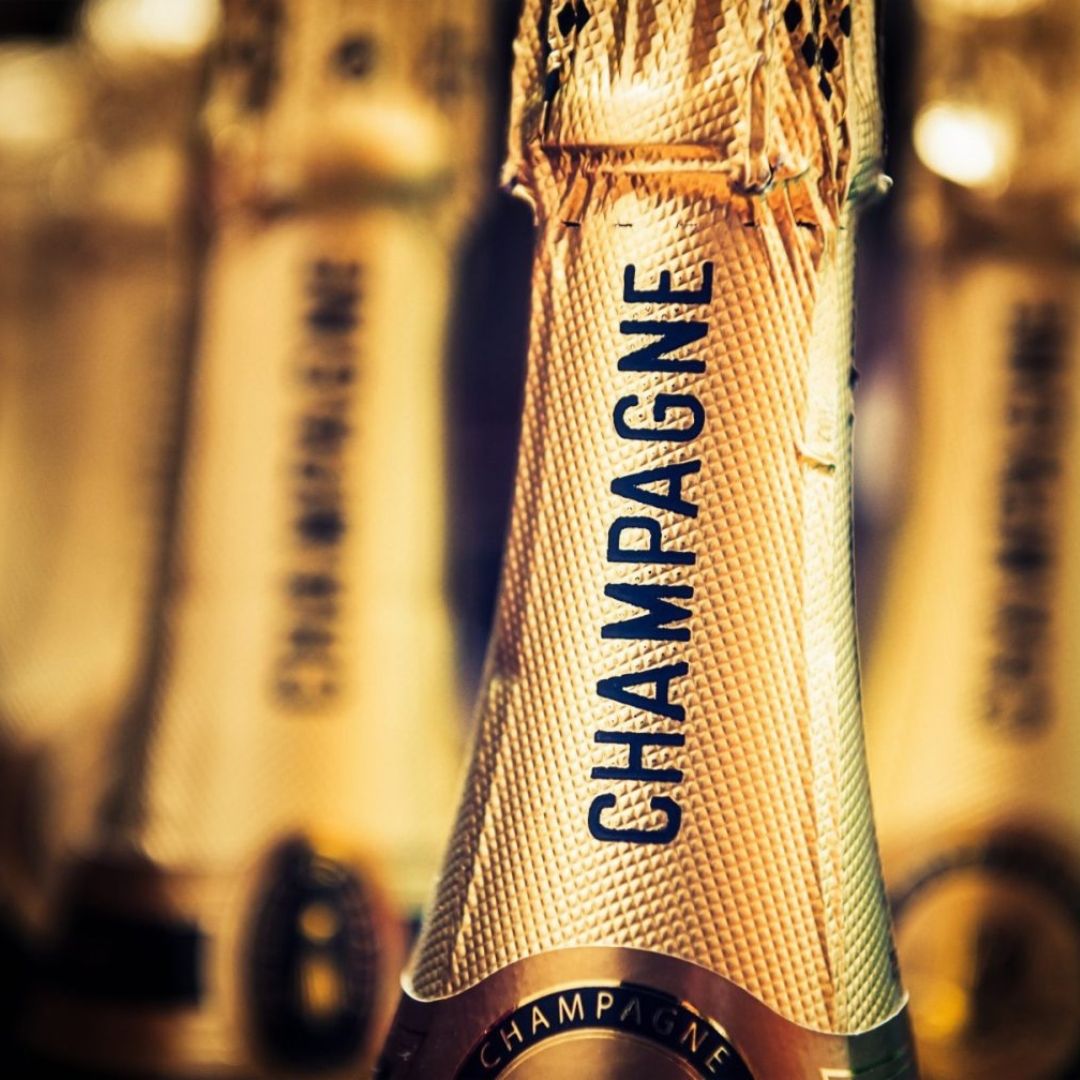
Across the country hundreds of wine racks house at least one bottle of non-vintage Champagne. Generously given, gratefully received, it lies waiting for that perfect celebratory moment. But Champagne’s popularity as a gift can result in some rather hazy provenance. With a vintage expression it’s at least simple enough to check the age, but that non-vintage fizz might have languished in sub-optimal storage conditions for years.
You could, of course, offload the risk of disappointment by consigning the suspect bottle to a raffle or regift pile. But what about the risk of missing out on a real treat? Fortunately there are a few insider tips to help assess whether and when it’s worth popping the cork.
Read the small print
Turn your NV Champagne around and take a look at the back label. Hidden in the small print there may well be a disgorgement date, or perhaps a code to enter on the producer’s website. Either way, this date records the moment when dead yeast cells from that secondary, fizz-inducing fermentation were removed and the wine was sealed with a cork, the final production step before its release to market.
“I would definitely start by looking at the label and seeing when it was disgorged,” advises David Porter, head of operations and buyer at London merchant Lea & Sandeman, which has a particularly proud specialism in smaller, “Grower” Champagne houses.
Cracking the code
While many of these boutique Champagne producers seem to revel in the amount of technical information they can cram onto a back label, larger houses are often a little more reticent. They tend to make the case that it’s not only impractical for labelling but also confusing for more casual revellers to see what might be misconstrued as a vintage date on a non-vintage Champagne.
Recent decades have seen a gradual shift in favour of sharing this level of detail. Champagne Bruno Paillard prides itself on being an influential trailblazer for printing disgorgement dates, which have appeared on every bottle released from this house since 1983. Charles Heidsieck took a different route in 1997, printing a “mis en cave” date on its Brut Réserve to show when the blend was laid down in the cellar; that concept has since been retired, but the disgorgement date remains on the back label. Other advocates include Philipponnat and Lanson. Several producers require a little more detective work: Laurent-Perrier bottles carry a discreetly etched code, the last six digits of which reveal the disgorgement date.
Fortune favours the brave
If this initial hunt draws a blank then Porter encourages bravery with the insurance policy of a Plan B. “I would open it, try it, but make sure I had a back-up,” he counsels. Once open, it should immediately become apparent whether you’re dealing with a pallid youth or golden oldie. “The first clue is the colour,” Porter notes; “that can tell you so much.”
Golden oldies
Even if the Champagne does turn out to have several years under its belt, that’s not necessarily a bad thing. High-quality non-vintage Champagne can not only survive but thrive with even quite considerable bottle age. That said, as the bubbles diminish and a richer, toastier character emerges, so too the optimal occasion for enjoying older Champagne tends to evolve.
“I like those toastier wines when it’s cooler or with food,” suggests Porter. That might involve a switch from Champagne’s traditional aperitif position to a role further into the meal. The cheese course can be an ideal moment to linger over a nutty, richly mature Champagne, especially for anyone seeking a lighter alternative to the fortified styles which often deploy at this point. If in doubt, few individuals across history have ever objected to the timeless combination of Champagne of any age with a platter of freshly baked gougères.
Source:The Drinks Business